
Caribbean street food culture is loud, lively, and unapologetically flavour-packed, the culinary equivalent of a steelpan rhythm drifting through a warm evening. It lives on busy pavements, outside rum shops, beside market stalls, and increasingly in global cities where the Caribbean diaspora has carried its recipes, techniques, and unmistakable vibes. While Trinidad’s beloved doubles often steal the spotlight (and fair enough, they deserve it), the reality is far richer, more diverse, and deliciously global.

From Port of Spain to Peckham, from Kingston to Queens, Caribbean street food culture has travelled far beyond the islands, adapting cleverly while holding tight to its roots. Today, whether you’re queuing at London vendors or hunting down NYC Caribbean food hotspots, you’re tasting a story of migration, memory, and mouth-watering innovation.
Let’s take a proper wander through the world of Caribbean street eats, and yes, we promise it’s not just doubles.
What Defines Caribbean Street Food Culture?
At its heart, Caribbean street food culture is about accessibility, bold seasoning, and community. It’s food designed to be eaten standing up, leaning against a car bonnet, or perched on a plastic chair while chatting to someone’s aunty.
Across the islands, certain themes repeat:
- Big, punchy flavours
- Clever use of spices and marinades
- Portable, handheld formats
- Freshly cooked, often in front of you
- Deep cultural fusion (African, Indian, Indigenous, European influences)
Street food in the Caribbean isn’t just quick food, it’s social glue. It’s where lime (hang out) culture meets culinary heritage.
Doubles: The Gateway Favourite
We can’t discuss Caribbean street food culture without giving a respectful nod to doubles. Born in Trinidad and Tobago, this humble yet mighty street staple bara (fried flatbread) filled with curried channa, has achieved near-legendary status across the global diaspora.
Its appeal is obvious:
- Cheap
- Filling
- Customisable (pepper level is serious business)
- Completely addictive
But here’s the thing: while doubles may be the poster child, they are just the opening act in a much larger street food concert.
Jamaica’s Street Food Stars
If Trinidad gave us doubles, Jamaica gave the world jerk, and the streets of Kingston still set the gold standard.
– Jerk Chicken and Jerk Pork
Nothing announces Jamaican street food quite like the smoky perfume of jerk seasoning hitting hot coals. Traditionally cooked in oil-drum barbecues, jerk chicken and pork remain cornerstone street foods both in Jamaica and across diaspora communities.
Key flavour notes include:
- Scotch bonnet heat
- Allspice warmth
- Thyme and scallion freshness
- Deep smoky char
Across London vendors and NYC Caribbean food trucks, jerk has become the gateway dish for many newcomers to Caribbean cuisine.
– Patties: The Portable Powerhouse
Jamaican patties deserve far more global hype than they sometimes get. These flaky, golden pastries, typically filled with spiced beef, chicken, or vegetables, are the ultimate grab-and-go street snack.
In diaspora cities, patties have evolved creatively:
- Coco bread sandwiches (the famous “patty sandwich”)
- Vegan fillings
- Gourmet fusion versions
- Late-night takeaway staples
Their portability makes them perfect ambassadors for Caribbean street food culture worldwide.
Trinidad & Guyana’s Street Scene Beyond Doubles
While doubles may headline Trinidadian street eats, several other heavy hitters deserve the spotlight.
– Aloo Pie
Think of aloo pie as doubles’ equally charming cousin. Stuffed with seasoned mashed potatoes and often topped with channa, chutneys, and pepper sauce, it’s comfort food disguised as street food.
Among the global diaspora, aloo pie has gained traction at:
- Carnival food stalls
- London pop-ups
- NYC Caribbean food festivals
It’s messy, satisfying, and completely worth the extra napkins.
– Bake and Shark
Few Caribbean street foods capture beachside energy quite like bake and shark from Trinidad’s Maracas Bay. Fried shark tucked into fluffy fried bake and loaded with toppings, from tamarind sauce to shredded lettuce, this sandwich is pure seaside theatre.
While authentic shark versions are rarer abroad (for sustainability reasons), diaspora vendors often substitute:
- Fried fish
- Spiced fillets
- Plant-based alternatives
The spirit, thankfully, remains intact.
Barbados and the Rise of Fish Cutters
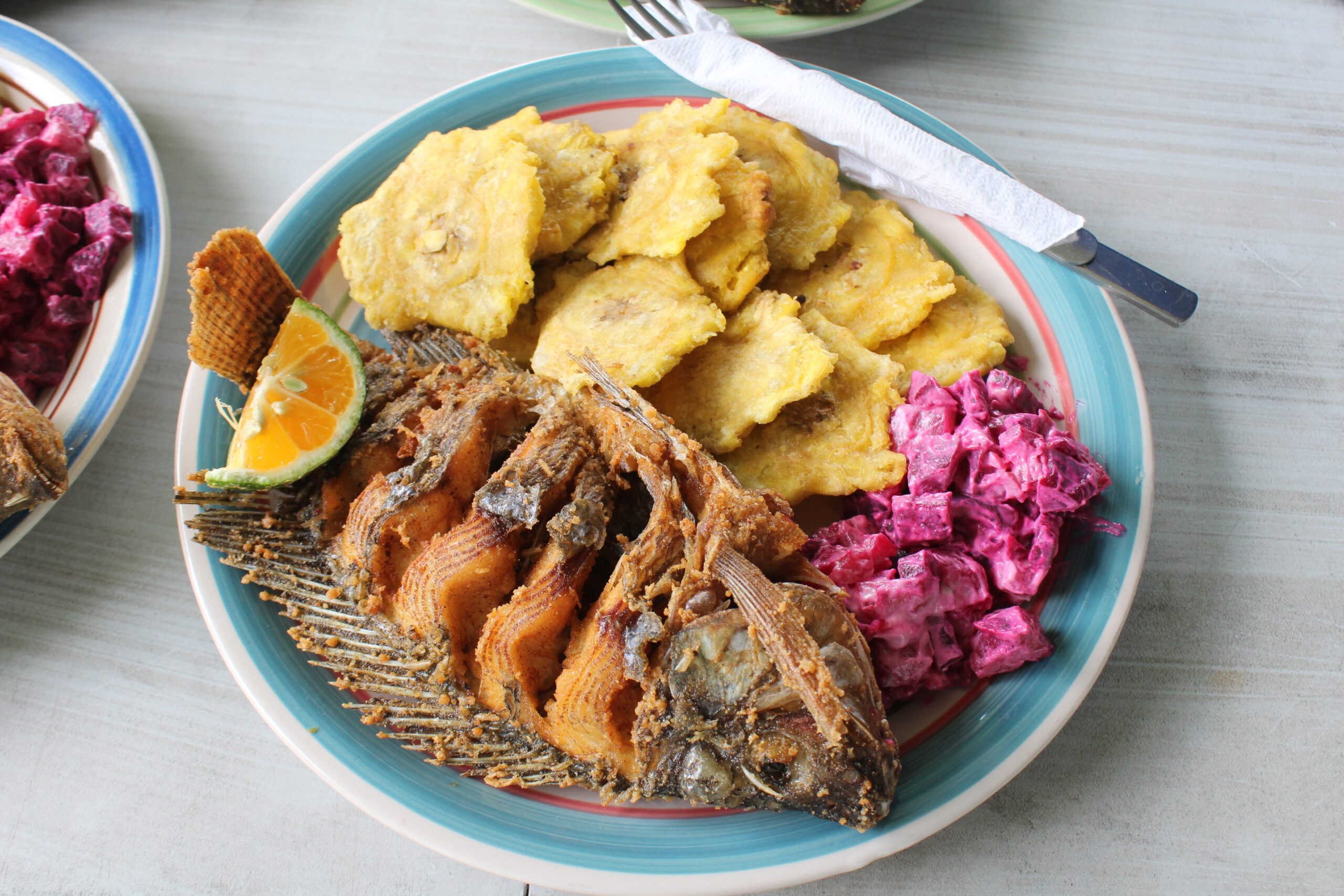
In Barbados, the humble fish cutter reigns supreme. Typically featuring fried flying fish (or substitute white fish) inside soft salt bread, it’s a masterclass in simplicity done right.
Across the global diaspora street eats scene, fish cutters have quietly expanded, especially in UK Caribbean communities where Bajan influence runs strong.
Modern variations include:
- Pepper mayo upgrades
- Slaw-filled versions
- Gourmet brioche interpretations
London Vendors: Caribbean Street Food’s UK Evolution
The UK, particularly London, has become one of the most exciting laboratories for Caribbean street food culture outside the islands.
Thanks to decades of migration from Jamaica, Trinidad, Guyana, Barbados, and beyond, London vendors have created a vibrant street food ecosystem.
Where the Magic Happens?
Caribbean street food thrives in:
- Brixton markets
- Peckham food yards
- Tottenham pop-ups
- Notting Hill Carnival stalls
- Street food festivals
Here, tradition meets innovation in the most delicious ways.
How UK Vendors Are Innovating?
The global diaspora has fostered both careful preservation and thoughtful innovation. Today’s London vendors are:
- Developing plant-based interpretations of traditional favourites (for example, jerk jackfruit)
- Creating Indo-Caribbean fusion wraps that reflect shared culinary heritage
- Refining presentation to suit contemporary food market audiences
- Showcasing regional specialities beyond the most familiar dishes
Despite these modern adaptations, the essence remains unmistakably Caribbean: confidently bold seasoning, generous portions, and the ever-present, and rarely casual, question of whether you would like extra pepper.
NYC Caribbean Food: Big City, Big Flavour
If London is regarded as the UK capital of Caribbean street eats, New York City stands as its American heavyweight counterpart. Neighbourhoods such as Flatbush, Crown Heights, the Bronx, and Queens have long been home to vibrant and well-established Caribbean food communities, shaped by decades of migration from Jamaica, Trinidad and Tobago, Guyana, Barbados, and other islands.
In these areas, Caribbean cuisine is not treated as a novelty but as an everyday essential woven into the local food landscape. Street corners, small takeaways, roti shops, and mobile food trucks serve everything from jerk chicken and doubles to patties, roti, and corn soup, often prepared using closely guarded family recipes. The density of Caribbean-owned businesses in these neighbourhoods has created micro food hubs where authenticity, competition, and community pride keep standards impressively high.
What distinguishes NYC Caribbean food in particular is its pace and scale. Vendors frequently cater to late-night crowds, busy commuters, and multi-cultural neighbourhoods, resulting in generous portions, bold seasoning, and menus that sometimes reflect cross-cultural influences from Latin American and African American cuisines. At the same time, long-standing community institutions, especially in Flatbush and Crown Heights, continue to preserve traditional preparation methods, ensuring that heritage remains firmly at the centre of the city’s ever-evolving Caribbean street food scene.
What Makes NYC Caribbean Food Unique?
New York’s version of Caribbean street food culture reflects the city itself, fast, diverse, and constantly evolving.
Standout characteristics include:
- Larger portion sizes
- Heavy Trinidadian and Jamaican influence
- Late-night food truck culture
- Strong Guyanese roti shop presence
- Fusion with Latin and African American food scenes
You’ll find doubles next to empanadas, jerk next to halal carts, the global diaspora in full culinary conversation.
The Role of Carnival in Global Street Eats
No discussion of Caribbean street food culture would be complete without Carnival. Whether in Trinidad, London, Toronto, or New York, Carnival acts as the ultimate street food accelerator.
During Carnival season, vendors roll out:
- Doubles by the thousands
- Jerk pans smoking nonstop
- Corn soup bubbling in giant pots
- Fried snacks in glorious abundance
For many diaspora communities, Carnival is where traditional recipes are preserved most faithfully, and where newcomers fall in love with Caribbean street eats for the first time.
Global Diaspora Street Eats: The New Wave
What’s especially exciting today is how Caribbean street food culture continues to evolve globally. Younger chefs and vendors, often second- or third-generation diaspora, are pushing creative boundaries while respecting tradition.
Emerging trends include:
– Plant-Based Caribbean Street Food
Vegan jerk, chickpea patties, and plantain-based innovations are expanding the audience without sacrificing flavour.
– Indo-Caribbean Fusion
Given the strong Indo-Caribbean presence in places like Trinidad and Guyana, fusion dishes are booming, think dhal puri wraps with modern fillings.
– Gourmet Street Food
High-end food markets have encouraged elevated plating and premium ingredients while keeping street authenticity.
– Social Media-Driven Pop-Ups
Instagram has become a major driver of discovery, helping small vendors build loyal followings quickly.
Why Caribbean Street Food Travels So Well?
Not every cuisine adapts easily to global street food culture, but Caribbean food does, brilliantly.
Reasons include:
- Naturally bold flavours that stand out
- Portable formats
- Strong diaspora networks
- Flexible recipes that adapt to local ingredients
- Built-in cultural storytelling
In many ways, Caribbean street food was “global-ready” long before the term became trendy.
Tips for Finding the Best Caribbean Street Food Abroad
If you’re exploring Caribbean street eats outside the islands, a few insider tips help.
1. Follow the queues
If Caribbean aunties are lined up patiently, you’re in the right place.
2. Listen for the accents
Authenticity often travels with the cook.
3. Check the pepper options
Serious vendors always ask your heat preference.
4. Visit during Carnival season
This is when menus are at their most traditional.
5. Support small diaspora businesses
They are the backbone of global Caribbean food culture.
The Future of Caribbean Street Food Culture
Looking ahead, Caribbean street food culture shows no signs of slowing down. If anything, the global diaspora is accelerating its reach.
Expect to see:
- More regional specialities gaining visibility
- Continued fusion with African and South Asian cuisines
- Expansion of Caribbean food halls
- Growth of plant-based Caribbean menus
- Greater mainstream recognition
What began as humble roadside cooking has become a global culinary movement, still rooted in community, still powered by serious seasoning, and still capable of drawing a queue faster than you can say “extra pepper, please.”
Final Bite!
Caribbean street food culture is far bigger than doubles, though we will always happily eat two (or three) when the opportunity arises. From London vendors to NYC Caribbean food trucks, the global diaspora has transformed humble island street eats into an international flavour force, all while keeping the heart, heat, and heritage firmly intact.
If your stomach is now making persuasive arguments, that’s perfectly normal, and for more delicious deep dives into Indo-Caribbean and Caribbean food culture, don’t forget to follow CurryBien, your future cravings will thank you.