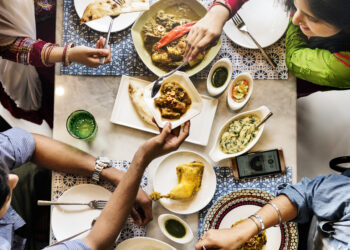

Simple Food Plays a Powerful Role in Sikh Celebrations, not because of extravagance or complexity, but because simplicity itself is deeply spiritual within Sikh tradition. In a world increasingly obsessed with luxury dining, presentation theatrics, and social-media-worthy plates, Sikh celebrations quietly and confidently move in the opposite direction. Here, food is not about indulgence or hierarchy; it is about equality, humility, community, and service.

The Philosophy Behind Simplicity in Sikhism
At the heart of Sikhism lies the belief in equality, selfless service (seva), and humility before the divine. These values extend far beyond prayer and scripture, shaping everyday actions, especially the act of eating together.
Food in Sikh celebrations is deliberately uncomplicated. This is not due to a lack of culinary skill or tradition, but because complexity risks creating divisions. A meal that everyone can eat, regardless of background, wealth, caste, or education, becomes a shared spiritual experience.
In Sikh philosophy, simplicity is not an absence of richness; it is richness of intention.
Langar: The World’s Largest Community Kitchen
No discussion about Sikh food traditions is complete without understanding Langar, the communal kitchen found in every gurdwara.
Langar is not symbolic. It is operational, daily, and unwavering. Anyone, Sikh or non-Sikh, rich or struggling, local or traveller, may sit together on the floor and share a meal prepared and served by volunteers.
Why Langar Food Is Intentionally Simple?
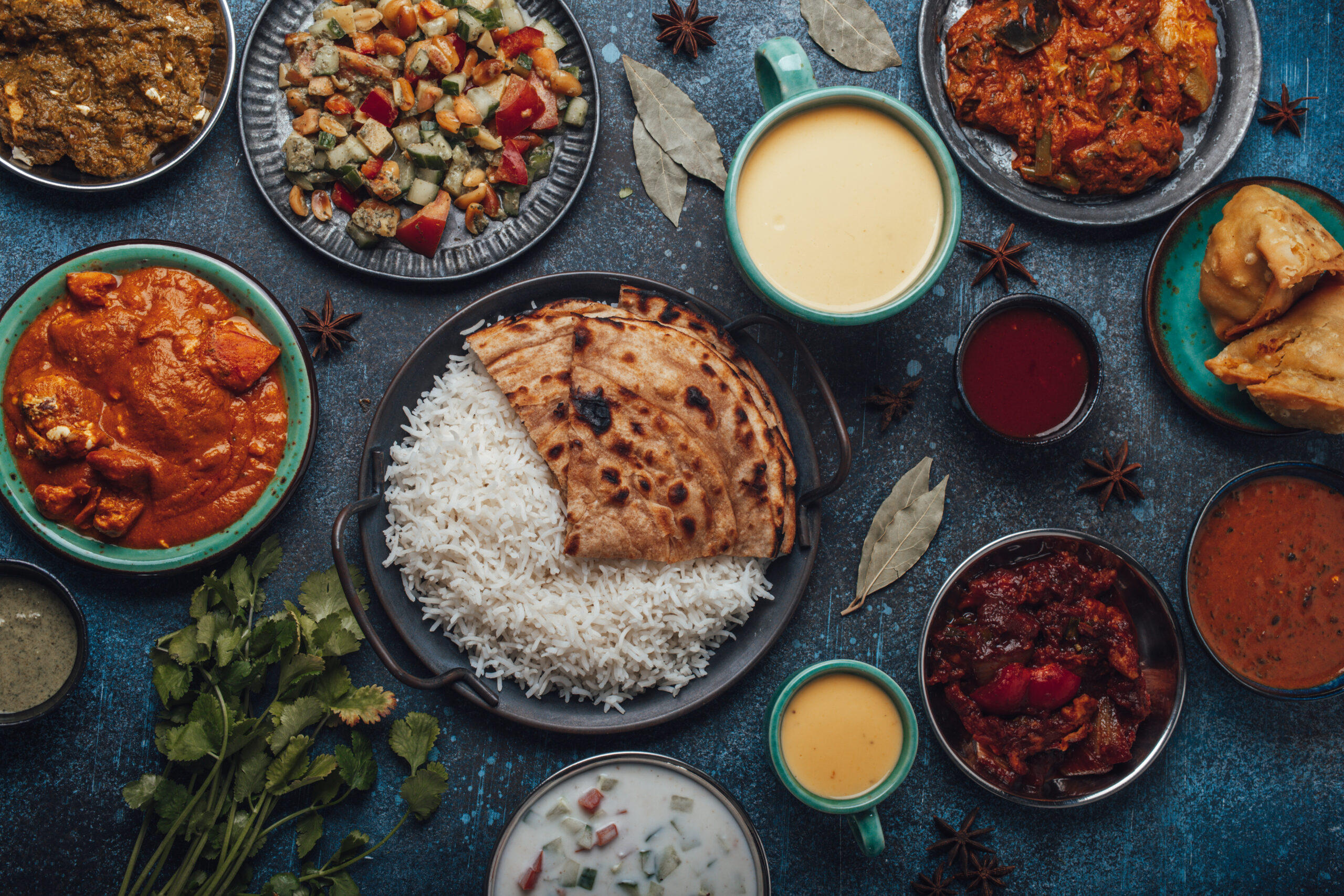
Langar meals typically consist of:
- Dal (lentils)
- Sabzi (vegetable curry)
- Roti or chapati
- Rice
- Kheer (on special occasions)
This simplicity ensures:
- Everyone can eat the same food
- Meals can be prepared at scale
- Ingredients remain affordable
- No dish overshadows another
The genius of Langar lies in its practicality. When the goal is unity, extravagance would be a distraction.
Sikh Celebrations Where Food Takes Centre Stage?
Sikh celebrations are deeply intertwined with food, yet never in a boastful way. Each occasion uses food as a medium for remembrance, gratitude, and collective participation.
Gurpurabs: Honouring the Sikh Gurus
Gurpurabs, which commemorate the birthdays of Sikh Gurus, are marked by prayers, hymns, and communal meals. The food served remains consistent with Langar principles, nourishing, vegetarian, and accessible.
The emphasis is not on novelty, but continuity. Eating the same food that your ancestors have eaten reinforces spiritual lineage in a quietly profound way.
Vaisakhi: Harvest, History, and Humility
Vaisakhi celebrates both the harvest and the formation of the Khalsa in 1699. While the day is joyous and often colourful, the food remains grounded.
Seasonal vegetables, freshly milled flour, and simple lentil dishes dominate. This reflects gratitude, not only for the harvest, but for sustenance itself.
In Sikh culture, abundance is celebrated by sharing, not displaying.
Why Vegetarian Food Is Central to Sikh Celebrations?
Sikhism does not mandate vegetarianism, yet Langar food is always vegetarian. This choice is profoundly practical and philosophical.
Vegetarian meals:
- Are inclusive across religions and dietary laws
- Avoid ethical conflicts
- Encourage equality
- Reduce logistical complexity
This is not a culinary compromise; it is intentional design. Food that excludes no one becomes an act of quiet radicalism.
The Power of Sitting Together on the Floor
One of the most striking elements of Sikh communal dining is Pangat, which involves sitting together on the floor while eating.
This physical act reinforces spiritual values:
- No elevated seating
- No preferential placement
- No visible hierarchy
In an age of VIP sections and exclusive tables, Sikh celebrations gently remind us that dignity does not require a chair.
The Emotional Language of Simple Food
Simple food carries emotional memory in ways elaborate dishes often do not. For many Sikhs, the taste of Langar dal instantly evokes:
- Childhood visits to the gurdwara
- Family celebrations
- Community gatherings
- Acts of kindness received or given
There is comfort in predictability. When food tastes familiar, it allows the mind to focus inward rather than outward.
Sikh Food Traditions in the UK Diaspora
Within the UK, Sikh communities have preserved these food traditions with remarkable consistency. Whether in Southall, Birmingham, Leicester, or Slough, gurdwaras continue to serve Langar daily, often feeding thousands.
British Sikh families also reflect these values at home:
- Celebrations prioritise shared meals
- Recipes are passed down with minimal alteration
- Simplicity remains a point of pride
In a multicultural British food landscape, Sikh culinary restraint stands out precisely because it does not seek attention.
Seva: Cooking as Worship
In Sikhism, cooking is not a chore; it is seva. Volunteers of all ages chop vegetables, stir pots, roll rotis, and wash dishes together.
No one asks who cooked the dal. Credit dissolves into collective effort.
This approach quietly dismantles the ego. When the goal is service, perfection becomes irrelevant. Nourishment is the success.
Why Simplicity Strengthens Community Bonds?
Elaborate food often creates spectators. Simple food creates participants.
Because Langar food is approachable:
- More people volunteer
- More people feel capable
- More people return regularly
There is no intimidation factor. One does not need culinary expertise to serve rice with sincerity.
Food as an Equaliser in Modern Celebrations
In contemporary society, food has become a marker of identity and status. Sikh celebrations offer an alternative narrative.
Everyone eats the same meal.
Everyone sits the same way.
Everyone is served.
This uniformity is not dull — it is deeply freeing.
The Nutritional Wisdom of Traditional Simplicity
Beyond symbolism, simple Sikh food is nutritionally sound:
- Lentils provide protein
- Vegetables offer fibre and vitamins
- Whole wheat rotis support digestion
- Minimal oil reduces excess fat
It is food designed for longevity, not indulgence.
Perhaps our ancestors knew something modern diets have forgotten.
Passing Traditions to the Next Generation
For Sikh families, teaching children to appreciate simple food is an act of cultural preservation.
Children learn:
- Food is shared, not hoarded
- Effort matters more than presentation
- Gratitude is part of eating
In this way, food becomes a moral classroom.
Why This Matters Beyond Sikhism?
While rooted in Sikh faith, these principles resonate universally. In an era of division, Sikh celebrations demonstrate how simplicity fosters unity.
Food does not need to impress to be meaningful.
It needs to include.
Final Thoughts: Simplicity as Strength
Why Simple Food Plays a Powerful Role in Sikh Celebrations? Because it strips life back to what matters.
It removes ego from eating.
It removes hierarchy from hospitality.
It removes noise from nourishment.
In Sikh celebrations, simple food becomes sacred not through excess, but through intention. It feeds bodies, builds communities, and quietly teaches the world that dignity tastes best when shared.
At CurryBien, food is understood as heritage, emotion, and identity. Sikh food traditions remind us that culinary greatness does not always lie in complexity.
Sometimes, the most powerful meal is the one that asks nothing of you except to sit, eat, and belong.
Follow us for more engaging content, and feel free to connect with us if you would like to share your own experiences.