
Sikh Culinary Traditions for Guru Gobind Singh Jayanti are not simply about what is cooked, but why it is cooked, how it is shared, and who it brings together. On this sacred occasion, food becomes an expression of faith, humility, service, and collective remembrance, values that lie at the very heart of Sikhism.
Understanding a festival through its culinary traditions offers one of the most meaningful ways to engage with its cultural and spiritual essence. Guru Gobind Singh Jayanti, which commemorates the birth of the tenth Sikh Guru, serves as a profound reminder that reverence can be expressed through simplicity, generosity, and the shared experience of food rooted in equality.
Who Was Guru Gobind Singh Ji and Why Food Matters on His Jayanti?
Guru Gobind Singh Ji was not only a spiritual leader but also a warrior, poet, philosopher, and revolutionary thinker. Born in 1666 in Patna Sahib, he shaped Sikh identity during a time of immense political and social upheaval. His most defining contribution was the creation of the Khalsa in 1699, a collective founded on courage, discipline, and equality.
One very important that arises is- What does this have to do with food?
A simple answer to it is “Everything”.
Guru Gobind Singh Ji championed the idea that all people are equal, regardless of caste, class, or background. One of the most powerful ways Sikhism expresses this belief is through langar, the community kitchen where everyone sits together and eats the same meal.
On Guru Gobind Singh Jayanti, food becomes a living philosophy. Cooking, serving, and eating together are acts of devotion, not ceremony.
Langar: The Spiritual Centrepiece of Sikh Culinary Traditions
If there is one cornerstone of Sikh culinary traditions, it is langar.
Langar is not festive food in the celebratory sense, it is intentional food. Simple, nourishing, vegetarian, and prepared with humility, langar is served daily at gurdwaras worldwide, but on Guru Gobind Singh Jayanti, it takes on added meaning.
Why Langar Is Always Vegetarian?
Langar meals are vegetarian to ensure that no one is excluded due to dietary restrictions or religious beliefs. This inclusivity reflects Guru Gobind Singh Ji’s vision of a society without barriers.
Common langar dishes include:
-
Dal (lentil curry)
-
Roti or chapati
-
Sabzi (seasonal vegetable curry)
-
Rice
-
Kheer (rice pudding)
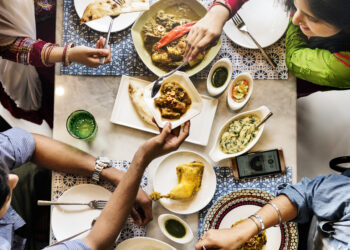
There is no “special plate” for anyone. Whether you are a visitor, a devotee, or a dignitary, everyone eats the same food, seated on the floor, side by side.
Seva in the Kitchen: Cooking as Devotion
In Sikhism, seva (selfless service) is a sacred duty. On Guru Gobind Singh Jayanti, thousands of volunteers participate in kitchen seva, chopping vegetables, stirring massive pots of dal, rolling rotis, washing dishes, and serving food.
There is quiet discipline in these kitchens, but also warmth, shared laughter, and a rhythm that feels almost meditative.
Traditional Foods Served on Guru Gobind Singh Jayanti
While langar remains the spiritual centre, many Sikh households also prepare traditional dishes at home to mark the occasion. These foods are deeply rooted in Punjabi culture and history.
1. Kada Prasad: The Sweet of Equality
Kada prasad is perhaps the most symbolic Sikh dish of all.
Made from just four ingredients, whole wheat flour, ghee, sugar, and water, it represents simplicity, devotion, and balance. Equal parts of each ingredient are used, reinforcing the idea of equality.
Warm, grainy, and comforting, kada prasad is distributed at gurdwaras after prayers. It is eaten with cupped hands, not spoons, as a reminder of humility.
No frills. No embellishment. Just faith in edible form.
2. Dal and Roti: Nourishment Without Excess
Dal and roti may seem everyday, but in Sikh culinary traditions, their simplicity is intentional. These dishes sustain without indulgence, reflecting discipline and gratitude.
On Guru Gobind Singh Jayanti:
-
Dal is often slow-cooked for depth rather than spice
-
Rotis are freshly made and served hot
-
The focus is on nourishment, not presentation
This is food that feeds both body and conscience.
3. Sabzi: Seasonal, Local, Respectful
Vegetable dishes served during Guru Gobind Singh Jayanti typically reflect what is locally available and seasonal — a subtle nod to sustainability long before it became fashionable.
Popular sabzis include:
-
Aloo gobi
-
Mixed vegetable curry
-
Lauki (bottle gourd)
-
Chana masala
4. Kheer: Gentle Sweetness to End the Meal
Kheer, made with rice, milk, and sugar, is often served during langar or prepared at home on Jayanti. Its soft sweetness contrasts beautifully with the earthiness of dal and roti.
It’s a reminder that restraint and comfort can coexist.
Guru Gobind Singh Jayanti in Sikh Homes
Beyond the gurdwara, Sikh families observe Guru Gobind Singh Jayanti with quiet reverence at home.
The day often includes:
-
Early morning prayers
-
Reading from the Guru Granth Sahib
-
Preparing simple meals
-
Visiting the gurdwara as a family
-
Teaching children about Guru Gobind Singh Ji’s life
Food is not about hosting or impressing guests. It is about grounding the household in shared values.
You won’t find elaborate spreads or experimental fusion dishes on this day. Respect, after all, has its own flavour.
A Punjabi Influence That Travels Far
Sikh culinary traditions are deeply rooted in Punjabi food culture, but they have travelled far beyond Punjab, across India, the UK, Canada, and the global diaspora.
In the UK especially, gurdwaras play a vital role in community life. On Guru Gobind Singh Jayanti, many UK gurdwaras serve langar to thousands, often extending invitations to people from all backgrounds.
It is not uncommon to see:
-
Office workers on lunch breaks
-
Students
-
Elderly neighbours
-
First-time visitors
All seated together, sharing the same meal. Equality tastes particularly good when served hot.
Why Sikh Cuisine Is More Than Punjabi Food?
While Sikh food often overlaps with Punjabi cuisine, it is guided by a distinct philosophy.
Key differences lie not in ingredients, but intention:
-
Food is always inclusive
-
Vegetarianism is a choice of compassion, not restriction
-
Service matters more than spice
-
Humility outweighs indulgence
Guru Gobind Singh Jayanti reinforces this identity, reminding Sikhs that food is not just culture, it is character.
Teaching the Next Generation Through Food
One of the most beautiful aspects of Sikh culinary traditions is how they educate without lectures.
Children learn by:
-
Helping roll rotis
-
Serving water during langar
-
Watching elders cook with patience
-
Sitting cross-legged alongside strangers
Food becomes a classroom where values are absorbed naturally, no textbooks required.
Respectful Eating: What Visitors Should Know?
If you’re attending langar on Guru Gobind Singh Jayanti for the first time, a few gentle guidelines help honour the space:

-
Cover your head
-
Sit on the floor with everyone else
-
Accept food with gratitude
-
Avoid wasting food
-
Eat what is served without preference
This isn’t about rules — it’s about respect.
The Quiet Strength of Simplicity
In a world increasingly obsessed with excess, Sikh culinary traditions on Guru Gobind Singh Jayanti offer a refreshing pause.
There are no towering desserts.
No plated theatrics.
No exclusivity.
Instead, there is:
-
Warm food
-
Shared space
-
Silent understanding
Guru Gobind Singh Ji believed that strength and humility could exist together. The food served in his remembrance reflects exactly that.
Why This Matters Beyond the Festival?
Understanding Sikh culinary traditions is not just about marking one day in the calendar. It is about recognising how food can shape communities, dissolve hierarchies, and carry values across generations.
Guru Gobind Singh Jayanti reminds us that:
-
Sharing food can be an act of resistance
-
Simplicity can be powerful
-
Equality does not need decoration
Sometimes, the most profound messages arrive on a steel plate, passed hand to hand.
Final Thoughts!
At CurryBien, we celebrate food as history, memory, and meaning. Foods of Reverence: Sikh Culinary Traditions for Guru Gobind Singh Jayanti show us that the truest flavours are not always the boldest, they are the most sincere.
Whether you observe the festival as a devotee, a neighbour, or a curious learner, the invitation is the same:
Sit.
Eat.
Share.
Reflect.
And if you leave a little fuller, in heart as well as stomach, then the tradition has done its job beautifully.
For more information and insightful stories, continue visiting CurryBien.